Featured

Old Bathtub into new garden ponds

Old Bathtub into a new garden pond

Turning an old bathtub into something beneficial for our garden


There is nothing like sitting in your garden and having a dragonfly zoom past your head trying to work out who this large hairy bearded man is or hearing the sound of a running stream in the background while you sit and watch the birds. for us it was something we didn’t know would be enjoyable until it happened.

Turning waste into something useful.

Old Bathtub

Our community, country and I guess the world is looking at how we can be more sustainable with what we have, not waste but reuse old things. So I was given an old bathtub by some very good friends of ours (you might think a good friend would not give such a weird gift) as soon as I saw this beauty I knew it could be much more. It’s all about having a vision and trying something new.

What was my vision?

Thinking when I sore this how awesome it would be in the ground with fish swimming, a little water pump with running water and some water lilies. well, safety first. we have a 3-year-old and having something that he can fall into is too much of a risk for us. plus digging a large hole big enough into hard clay that a bathtub would be ground level is just too much of a job for me. So start thinking long term, 2 or 3 years time would love to have plants growing all over this fully hiding the tub. I think a lot of people get stuck with projects because they can only see a vision for the here and now and not casting their minds on the years so come. sure it might not look to crash hot now but plants grown, animals move in and you can build a whole ecosystem around a small space if you give it time.

How to blend it in.

Firstly we had to work out where. we were thinking somewhere close to our main seating/walking space and if it is hidden away you won’t be able to keep an eye on it if any care or maintenance is needed. plus we can make a little garden around it with stepping stones to the pond to look as well. so we found a space (not hard to do when you only have a small backyard) so I was thinking of covering as much of the white as I can with fencing wood to help it blend in with the background over time (plus fencing wood is cheap as chips and will hold up to the water and sun)

Building the frame

building the frame took longer than I was thinking it would but not as hard as it might seem. I built 3 walls, one large for the front and 2 for the sides. making sure leaving space between the wood for it to dry out if it gets wet, space for plants to grab onto and grow as well. with my trusty drop saw (an ex-display model that was 80% off the price so lucky to pick this one up) made the job quick and easy.

the quickest and easiest way to build something like this is to draw up your design and cut all the wood you need all at once. please do not follow my unsafe footwear choice I have when i was cutting the wood. once all the wood has been cut lay them out so have them all set up, follow behind with a drill and some self-drilling screws. the fencing wood is 20mm think (2cm) so I used 40mm self screwing timber screws to hold the wood together.

once all 3 sides are done I placed them on the tub to see how they looked. soon realized that I needed to cover the top of the tub as well as the white was showing to much. once I was happy with how it looked I removed the tub and attached the 3 sides together to make it into a sort of box to slide over the tub. as I did not want to attach anything to the tub itself if I needed to change my mind at a later time (also keeping it watertight).

i was lucky enough to be given some plants and 4 little fishes as well with the tub. so I filled up the pond and potted up the plants. One thing is that we got to remember that when potting up water/pond plants we can’t use the normal potting mix as most of the potting mix will float and drift away. use garden soil with added sand to keep the soil under the water. I also made myself a little Solar pond fountain and grew some rare lotus some seeds as well. (more on this in a later blog)

Post a comment and let me know something you yourself have reused for your garden and found it to be a gem.

Featured

Attending Bee Keeper Day Training

Attending Bee Keeper Day Training

The next tool in effective backyard food growing. These little girls will increase crop pollination and also give us honey and bee’s wax.


So Why bees?

The biggest question is why bees. I firstly want to say I myself am no expert, i don’t even have a hive yet. well, the simple answer is pollination is key for a large quantity of the crop in small spaces. At the end of the day, this is the mission of our journey for Growing Gardener. The bees will increase the amount of fruit and veggies that will set from the flowers as most of my fruit trees and veggies need cross-pollination to set. This means it needs pollen from one flower to touch another flower to produce the fruit/veggie.  

Picking he right bees for the right reason.

so here in Australia, we have 2 types of main bees we have in hives in our back yard. we have the European bees (most common in the world) and Australia native bees (only found in Australia and PNG). both of these bees live in colonies and both will store honey. the 2 main differences are honey production and the ability to sting.   

European bees – these ones will pollinate more effectivly. there are 2 main reasons for this, firstly they wake up and start the hard work much earlier in the morning and work later into the afternoon then the natives bees. Secondly, they are so much bigger than the other bees so they can stay out longer collecting more pillion and in effect cross-pollinate more followers. an added bonus is that a healthy hive is said to give you about 60kg of honey a year. the downside is that they can sting, so if your allergic then these are not the ones for you. also, the gear needed to check and harvest the honey can add up quickly. 

Australian native bee hive.

Australian native bees. – for what I have heard there are something like 500 or so native bees from Australia however only around 3 spices of them live in colonies. now, these guys are about 2 times smaller than a fly. these guys will produce honey, however, your be lucky to get 1kg a year and it is risky to take the honey are it can kill the hive. the main reason why people will pick these over the European bees is that once the hive is up and running you don’t need to check on them and they don’t sting. i have heard reports of peoples native bee hives melting and killing whole hive at the very high temp we get here in Townsville.

What did we learn that day?

Alot!. We learned about the 3 types of honey bees, (workers, drones and the queen) we looked at how to test for hive for disease and pests, how to harvest honey, how to find the eggs queen. the gear and suites. we also looked at how to build your own hive from a flat pack. it was well worth it. i have to say you cant do it alone. you need to join a club to learn from others.

Whats next for me?

Well i have chosen to go with the European bees. the start up cost i have been told is around $650 for all the gears some bees and a hive. where if i was to go with the native bees it will cost me $500 just for the hive. (plug if i go European i can offset the cost by selling the honey) also the native bees are almost impossible to get your hands on them. Native bees are a much slower growing hive, they often dont get split and rarely sold. I learned so much that day and i know how what steps to starting up my hive. Firstly i need to get my hands on some gear. lucky the local bee club has a shop. my goal is that within the next 6 months to have a hive and be on the way to harvesting my first lode of honey.
Make sure you Subscribe below as i will be blogging every step i make from this point out when it comes to bees and i know there is a ton of others out there who might want to give it a try.

Featured

Snake Beans Harvest.

Growing more then we can eat

These beans are a must for any garden bed, they grow easy, quick and produce a lot, A LOT of beans. plus they taste amazing.


Snake bean’s – what are they?

snake bean ready for harvest.

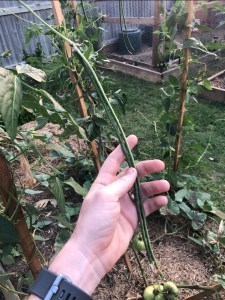
If you are anything like me a couple of years ago you would be asking the same question I did. well, they are just like your normal beans but 5 times the size. for us, this crop was an easy choice to grow for a number of reasons. (saying that we had no idea it would produce so much). just on Sunday, I harvested 1/2 a KG of beans and the more I pick the more it grows. These are just some of the reasons why everyone should give these snake beans a go.

  • Seeds spouted at 100% rate
  • Quick growing
  • Suited for a hot sunny spot
  • large continues harvesting of the crop
  • Taste amazing

Seeds spouted at 100% rate

For use with the heat of 36-40 F in the shade (with shade cloth) and a sun that pumps out anywhere between 10-14.5 UV index (Extreme, I burn just walking to my chicken coop) it’s almost impossible to germinate seeds. unless am doing something so wrong. with the heat they cook, with a greenhouse box they get mould within a day, they dry out too quickly or the sun burns seedlings leaves.
so when we tried these seeds without a problem and with all of them germinating I was over the moon. within a week they emerged up out of the soil and within 3 weeks we had them in the ground (why so long as we got busy)

Quick Growing

Snake bean growing up on a frame

When planting we found that if we work on levels you get a much fuller, more aesthetically pleasing, effective and productive garden then just mass planting on ground level with one type of plant. once planted I had to build height for them to grow on. So I thought why not build a quick connecting frame for them to grow up and also provide little shad for the lower level plants. I made. the frame was made out of long large stakes with some twine holding it together. I might look at adding a middle level to the frame to see if I can get some pumpkins to grow up it next.

Suited for hot sunny spots

These beans seem to grow better and quicker the hotter and sunnier the position is. the leaves themselves are dark and hard so they can take the hot high UV of Townsville. it also seems to not stress out when forgetting to water for 2 or 3 days. as these beds are raised they don’t hold onto the water as well if I planted directly into the ground. as our yard is made up of hard aged clay growing directly into the ground does not work well as plants struggle to get a hold.

Large continuous harvesting of the crop

for on Sunday, I harvested around 1/2 KG of beans. these beans can grow up to 80cm long. the longer they grow the more bitter they can become. it is recommended that they get harvested around 30cm as this is the sweet point of a large crop and good tasting plant. also, note that most afternoon we have gone out and gotten a hand full of beans to add to our dinner as well. they recommend 1 plant per person in the family. and I would say that is about spot on. we have 8 plants growing at the moment. and we are loving all the beans. might have to look at giving some away to friends if the harvest is getting too crazy.the harvest is getting to crazy.

Taste amazing

we have found that these beans can be overcooked easy and end mushy. for best results, a quick blanch in hot water is best. making sure you always add the beans right at the end of the cooking of a dish. no one likes mushy beans. we add our beans to stir-fries, salad, stews or anything at all. for prepping the beans for cooking its quite easy. a quick wash, cut the tips (if you want) and you’re ready to go.

Featured

A little weekend project to do in under an hour (depends if you get help by the little one.

a little weekend project to do in under an hour (depends if you get help by the little one.

a little weekend project to do in under an hour (depends if you get ‘help’ by the little one).

A messy place

So Christmas is coming up and its time to start sorting out the house. for us, we want to sort out our crazy amount of ‘halfway house’ pot plants. (these are pot plants that are waiting to grow on to bigger and better places)

Don’t tell Chris this but also so I can have somewhere quick to dump some handy tools rather than taking the time to put them fully away.

Measuring for the shelf

All in all the project cost around $45 for all the gear from bunnings.

  • 8 x fence panels
  • 4 x brackets
  • And some screws

Step 1 – is to layout the 3 panels with equal spacing between. I used a spare wood panel to help with measuring the spacing.

Screwing for the shelf

Step 2 – cut another panel to make an overlay one both ends of the 3 panels to hold them together.

Step 3 – screw each end with 2 screws each to avoid wood moving or slipping around.

Step 4. get help by my amazing son

Sammy Helping

Step 5 – attach brackets to the fence (keep in mind we attached it to the crossbar of the fence as it will be able to hold the weight. if you attach it to just a single vertical panel the weight will pull the panel out. (don’t think the neighbours will be too happy if that happens) making sure brackets are level.

Step 6 – Attach shelf and enjoy.

Shelves

Featured

Our First Egg

Our first Egg

Here my son at 2 and a half collecting our first egg. At first, he was confused and curious about the ‘where, why and how’ it all came to be. it was quickly followed with more learning about gravity, what happens when eggs hit the floor and what was inside the egg.

Sammy Confused where the egg came from.

This can be our first blog, many more to come i hope. so we got 4 baby chickens a while ago in hope to teach my son responsibility (that didn’t work well, ive ended up caring for them). we waited and waited from them to lay a egg. received the photo on my way home from work followed by a phone call from a excited wife telling me the chickens have given us out first egg. shortly followed by that phone call i received another photo and phone call by my wife laughing and saying Sammy has dropped our first egg.

now 4 months on we are getting almost around 3 eggs a day from out 4 chickens and learning how useful they can be. from eating our scraps, giving us chicken fertilizer (a lot of it) truing grass/hay into mulch and just relaxing watching them being them.

highly recommend anyone who can should get a some chickens.

The Family

The Family

Let me introduce my small family to you all. i hope that over the years you will also feel apart of our family.

My amazing wife! – Chris

Married to my beautiful wife, who has given me an amazing son.

Chris and I have been married in December 2015 and have shared many dreams and visions of our own home as well as our calling in life.  She grew up in PNG and has PNG mother and a Swiss Father. she adds so much knowledge and life experiences in my life. (as well as making tasty tasty food)

Sammy (mini me)

Sammy (Samuel Peter Steward) is our crazy little son who has so much energy and passion for life. 

Sammy was born in November 2016. As you can see he loves all things food. He is hands-on and always wanting to help dad collect “marto’s” (tomatoes) from the garden.  

Myself – Blake

Growing up in Townsville. to be honest, I have no idea what am doing or how to do most things, i learn by doing and by making mistakes. that’s half the fun for me. 

Design a site like this with WordPress.com
Get started